For Fresno Pacific University faculty, the practice of weaving faith into teaching and learning stretches far beyond an opening prayer or closing devotional in the classroom.
Every minute in class—and beyond—is receiving renewed emphasis in faculty development as classroom leaders continue embracing faith as a cornerstone of learning and teaching.
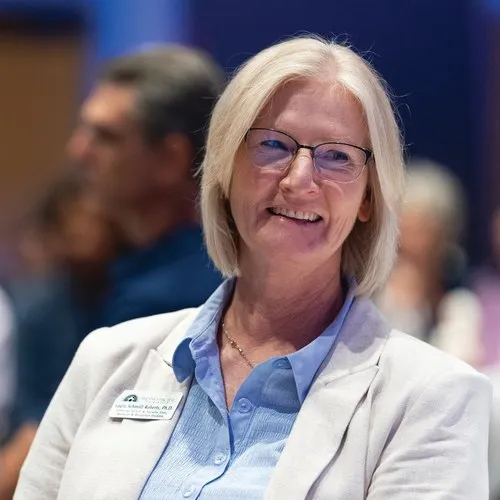
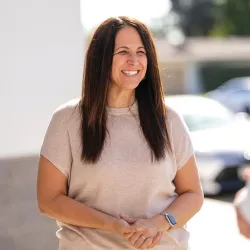
“It’s about what we’re doing when we’re teaching,” says Laura Schmidt Roberts, Ph.D., director of faculty development and professor of biblical and theological studies. “How is the student’s experience different or better? How does my faith shape the way I set my class and interact with my students and develop a learning community in my classroom? How are my core convictions and beliefs as a Christian shaping what I do as a teacher?”
Every Moment Matters
Fresno Pacific’s creative and dedicated faculty are leading this conversation in many ways, Roberts says. There is an expanded, community-wide focus following the arrival of Provost Alison R. Noble, Ph.D., in 2024, as well as faculty development events held last year.
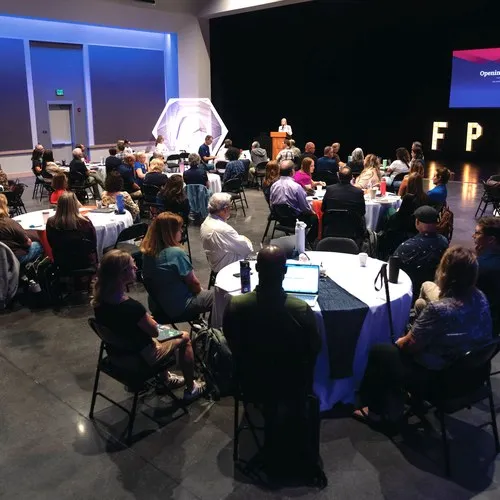
Last fall, a Faculty Development Day was held featuring David Smith, Ph.D., who drew upon his own book Everyday Christian Teaching.
Throughout his visit, Smith encouraged faculty to think about every minute and aspect of their class in the context of Christian practices such as hospitality, spiritual formation, and the valuing of each person, Roberts says. One of his many suggestions was setting up small student accountability groups to foster a sense of belonging and connection to both classmates and the campus.
This concept, a new angle on the Community of Learners tenet of The Fresno Pacific Idea, has resonated with faculty. Accountability groups bring together students in traditional ways, such as studying, but also inspire classmates to think about, value, and care for each other. Research shows a sense of belonging is the key factor in a college student’s success and persistence.
Accountability groups extend the idea of a learning community, with groups of three or four students understanding they are responsible for their own education as well as the education of others. If someone is missing, for example, another group member will reach out to check in and ask if they need help or support.
This practice “becomes a building block of the larger community of learners in the classroom,” Roberts says. “It’s a course requirement, but it builds habits that help students look outside of their own learning experience and learn from and value each other—habits that they take with them to other classes and contexts.”
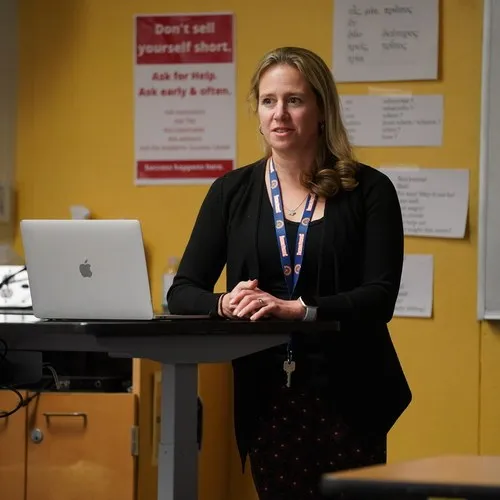
Whitney Bortz, Ph.D., associate professor of liberal studies, uses accountability groups in her senior capstone course. She also made other changes, such as conducting some morning meetings in a circle to encourage eye contact and using technology in pairs or groups to preserve human connection and collaboration.
In response to Smith’s urging that students should be encouraged to talk and learn from other community members, Bortz created an interview assignment in one class. Students are required to interview three people with different roles at a school.
“They ask them questions about the same topic and compare perspectives, and then present to class what they have learned and how it connects with other course materials,” she says.
Roberts says those examples “demonstrate how building community, connecting people, learning from each other, and valuing the input and voice of each person are central to a faith that sees each person as made in God’s image, views people’s diverse experiences and perspectives as a gift, and understands humans are fundamentally relational beings—relationally constituted.”
“These classroom practices intend to steward the instructor’s responsibilities in the classroom born of those convictions.”
Through a Christian Lens
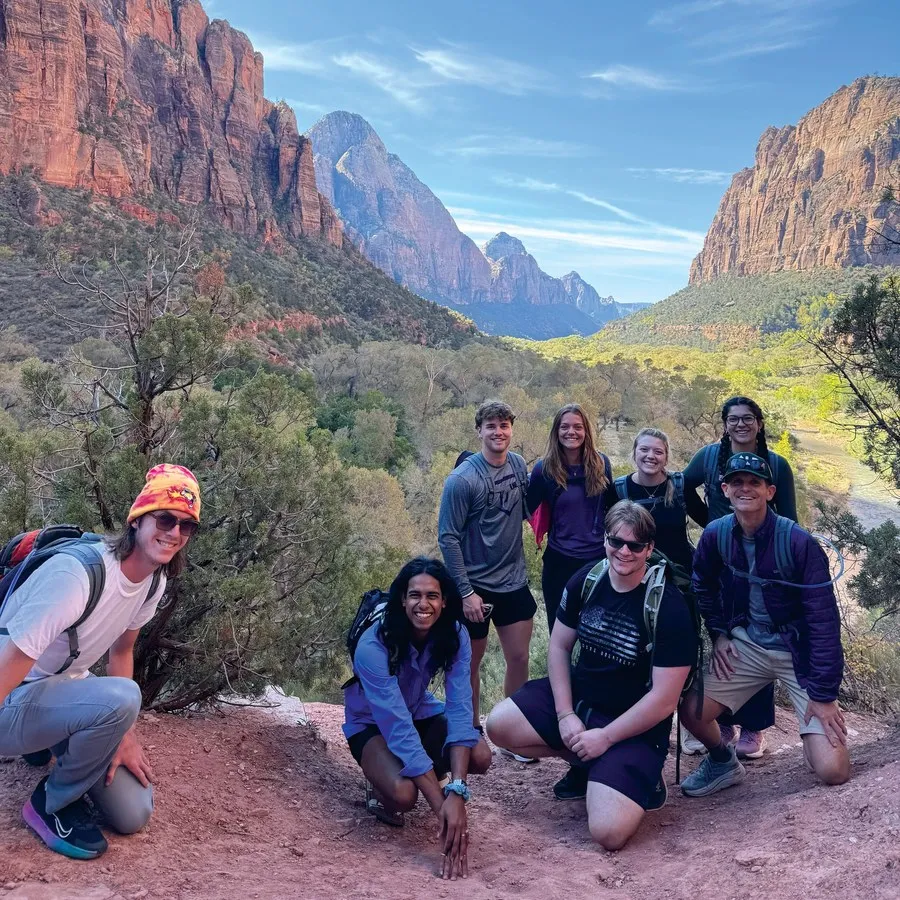
Raymond E. Winter, Ph.D., assistant professor in wilderness studies, also made changes following Smith’s visit. One adjustment to his ecological approach to Introduction to Wilderness Studies is “to engage in the practice of spiritual disciplines (which move us toward our virtuous selves) rather than leaving them as concepts or academic discussion points for students to explore (or not) on their own,” he says.
That may mean starting or ending class with three minutes of silence, contemplation, or prayer, or engaging in service such as picking up trash en route to the next class. “It grounds the content of the day’s lesson in the real and embodied world, and ideas become exercised choices that move us towards virtue,” Winter says.
Integrating faith into teaching and learning may seem more natural in subject areas such as ministry and theology. But Christian perspectives can be part of every disciplinary area, Roberts says.
“For example, I know our business faculty intentionally engage students in the program in relation to ethical concerns, including practices that may be legal or permissible but that are not ethical from a Christian standpoint. Similarly, teaching a cultural geography class would include a concern for justice, equity, and marginalization informed by Christian convictions.”
“An important part of ‘faith integration’ here at FPU is that students encounter Christian faculty in the classroom and so encounter a disciplinary area through a Christian lens,” she says.
Continuing the Work
One aspect of faculty development in this area is fresh re-engagement with the Lilly Network of Church-Related Colleges and Universities and the Network for Vocation and Undergraduate Education (NetVUE), which offer resources such as conferences, workshops, seminars, and grants.
Roberts was recently selected by NetVUE to take part in the “Summer Seminar: Institutional Leadership for Vocation,” which brought together academic leaders to explore their vocational paths and consider how vocational exploration and discernment can play an increased role on individual campuses. Both NetVUE and Lilly offer a variety of programs that create opportunities to explore faith-related topics and teaching.
Bortz and Chris Janzen, M.F.A., associate professor of art, design, and creative innovation, recently were named Lilly Faculty Fellows. The two-year fellowship includes four conferences and $8,000 in start-up funding to conduct a faculty development program on campus.
In addition, thanks to generous donors, Fresno Pacific has additional grant awards that can be broadly applied to faculty research, teaching, or course development, or focused on the intersection of faith, teaching, and learning, Roberts notes.
“I think faculty are really energized to think more deeply about this question of how their faith shapes their teaching, and to think more concretely about what that means in the classroom setting,” she says.
Have an idea for Sunny's Blog?
Email storyteam@fresno.edu.