The choices you make now, including the degree you earn, shape much of what comes next.
Understanding what a registered nurse does, how nursing degrees compare and the state licensing steps can help you choose a program that matches your plans. It also helps you see how your education connects to the kind of nurse you want to become and the kind of person you want to be along the way. If a BSN is part of that path, Fresno Pacific University’s Bachelor of Science in Nursing program is one option to explore as you consider your next step.
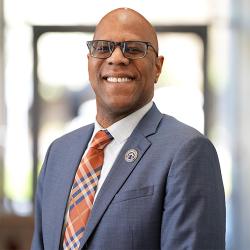
As the BSN program director at Fresno Pacific University, I teach future nurses while continuing to practice as a family and psychiatric mental health nurse practitioner. My career spans emergency medicine, urgent care, psychiatry, nursing education and hospital leadership. Each role has shown me how clinical judgment and thoughtful leadership affect the care patients receive.
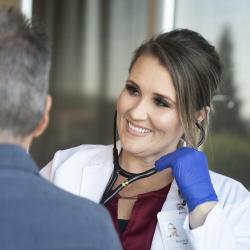
A registered nurse (RN) is a licensed health professional who assesses patients, provides and coordinates their care, gives treatments and teaches patients and families how to stay well. RNs work as part of a healthcare team and are often the main point of contact for the people in their care. They are often the ones who notice when something feels off and who help patients and families understand what comes next.
That responsibility can look different depending on the setting. In the emergency department, I learned how much can depend on a nurse recognizing a subtle change and speaking up. I also learned that the few minutes spent explaining a plan to a frightened family matter just as much to their care experience.
Day to day, an RN may monitor vital signs, record symptoms, update patient records, help create care plans and explain medications so patients understand their treatment at home.
RNs work in many settings. Hospitals, clinics, schools and community health organizations all rely on nurses to keep patients safe, informed and cared for. Their responsibilities may look different from one setting to another, but careful assessment, clinical judgment, patient education and teamwork follow them into every role.
Every path to becoming an RN begins with a state-approved nursing program. The degree you choose shapes how long your education takes and how much ground it covers. In California, two degrees can prepare you to start:
- Associate Degree in Nursing (ADN): A shorter, entry-level nursing degree offered mainly at community colleges.
- Bachelor of Science in Nursing (BSN): A university degree with broader preparation in community health, leadership and evidence-based nursing practice. It can also support a wider range of clinical and professional opportunities.
Both degrees can lead to the same license. Graduates of approved ADN and BSN programs in California can qualify to take the national nursing exam.
An ADN can be a strong way to enter practice. It was the beginning of my own nursing journey. Earning my BSN later gave me more room to study leadership, research and care beyond an individual encounter.
If you are comparing nursing programs in California, look closely at each program’s clinical training, student support and approval status before you apply. I would also encourage students to think about how a program will help them grow beyond simply meeting the requirements for licensure.
If you already hold a license as an RN, you can pursue an RN to BSN pathway to earn a bachelor’s degree without starting over.
The path to a California nursing license follows a clear order. These are the main nursing license requirements:
- Complete a nursing program approved by the California Board of Registered Nursing. Approved programs meet the state’s standards for coursework and supervised clinical hours.
- Apply for licensure with the California Board of Registered Nursing. Applicants submit the required application and supporting documents to the Board.
- Complete fingerprinting and a background check. This is part of California’s licensure process.
- Pass the NCLEX-RN (National Council Licensure Examination for Registered Nurses). The national exam measures whether an applicant is ready to practice safely and covers areas such as patient care, safety and clinical judgment.
- Receive your California RN license and begin practicing. Once the Board issues your license, you can apply for RN roles.
I tell students to prepare for the NCLEX throughout their education by asking why a decision is safe for this patient in this situation rather than relying only on memorized answers.
Because requirements can change, students should always review the California Board of Registered Nursing’s current instructions before applying.
Earning a BSN can help you think beyond the bedside. Coursework in leadership, public health and evidence-based practice can help you see how a patient’s family, neighborhood and community shape their health. Evidence-based practice also helps nurses use current research to guide the care they give.
That broader view has shaped my own career in emergency care, urgent care, psychiatry, advanced practice, nursing education and leadership. Those experiences taught me that a nurse’s work reaches beyond one bedside. I want students to see the person beyond the immediate diagnosis and understand how factors like transportation, cost and communication can affect a patient’s care.
A BSN may also support later graduate education and career growth, depending on the role and employer. It was an important step on my own path to becoming a family nurse practitioner, psychiatric mental health nurse practitioner and nursing educator. Nurses interested in advanced practice can also explore Fresno Pacific University’s Master of Science in Nursing, Family Nurse Practitioner program.
The Central Valley depends on nurses to care for growing communities. Skilled RNs work across many settings in the region, including:
- Hospitals and emergency departments that provide acute and urgent care.
- Community clinics and health centers that serve rural and underserved communities.
- Schools that rely on nurses to support student health.
- Public health programs that focus on prevention, screening and education.
The Valley is a largely agricultural region with many rural communities, so nurses here often care for patients who travel long distances to reach care. That context makes preparation in community and public health useful for nurses who plan to work close to home, including those who feel called to serve the place they grew up in.
This is why I want students to be ready to listen closely to the people they serve and understand the barriers they may face in getting care. Patients bring their families, cultures, work and lived experience into every encounter, and those details should shape how we care for them.
Becoming a registered nurse starts with choosing the educational path that fits your goals and how you want to serve. At Fresno Pacific University, students in the Bachelor of Science in Nursing program learn through classroom study, nursing labs and clinical training across the Central San Joaquin Valley. FPU’s BSN program is approved by the California Board of Registered Nursing and accredited by the Commission on Collegiate Nursing Education.
As the BSN program director, I want students to leave able to make sound clinical decisions, ask good questions and treat every patient with dignity.
Our Christian foundation also shapes how we talk about service and leadership. To me, servant leadership is visible in ordinary actions: being prepared, helping a colleague, advocating when a patient is overlooked and taking responsibility when something needs to be done. Those habits matter long before a nurse holds a leadership title.
As you explore programs, I hope you will look beyond the degree title and ask where you will practice, who will support your learning and how the program will help you become the nurse you want to be.
It depends on the degree you choose and your individual course of study. ADN programs generally take less time than BSN programs, and both are followed by the licensure process.
Both are pathways toward RN licensure through approved programs. A BSN includes additional study in areas such as leadership, research and population health and may support broader career and graduate education opportunities.
No. Eligible graduates of approved ADN and BSN programs can take the NCLEX-RN after meeting the California Board of Registered Nursing’s requirements.
No. California is not a member of the Nurse Licensure Compact. If you hold a nursing license in another state and want to practice in California, check the California Board of Registered Nursing for current requirements.
Explore Fresno Pacific University’s nursing pathways: the traditional BSN for students beginning their nursing education, the RN to BSN for licensed nurses ready to complete a bachelor’s degree and the MSN/FNP for nurses pursuing advanced practice.