This spring, I had the opportunity to spend part of my sabbatical at the Quetzal Education Research Center (QERC) in Costa Rica.
I stayed there from January 26 through March 3, 2026, with two main goals: to work on a research paper about bird distributions in the tropical Americas and to learn more about how tropical biology courses are taught in the field.
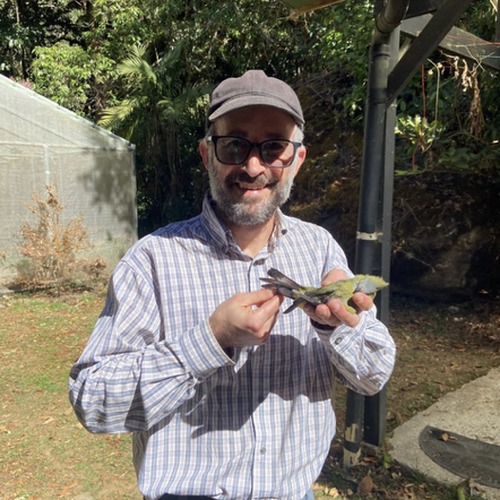
Birding has been a hobby of mine since I was about 10 years old, so Costa Rica was a pretty good place to spend a sabbatical.
These days, instead of carrying binoculars on my birding walks, I usually carry a camera with a telephoto lens. QERC has many trails leading into the forest, which gave me plenty of opportunities to observe and photograph birds. Some of those observations also became part of my eBird lists.
Following a Bird Through the Mountains
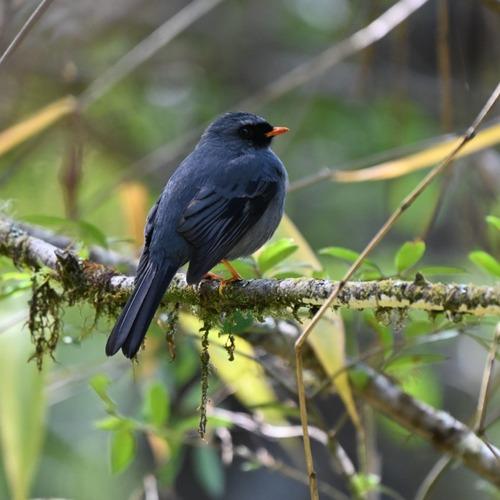
One bird I was especially interested in was the black-faced solitaire.
This species lives at high elevations in Costa Rica and Panama, and its range may be shifting upward as the planet warms. I was able to photograph it several times around QERC while working on research connected to bird distributions and climate change.
My research uses observations collected by professional and amateur birders and reported to the eBird citizen science database over the last several decades. One of the things I enjoy about this work is seeing how individual observations can become part of a much larger scientific picture.
Learning Alongside Students
Another part of my sabbatical was learning more about how tropical biology courses are taught at research stations in Costa Rica and Panama.
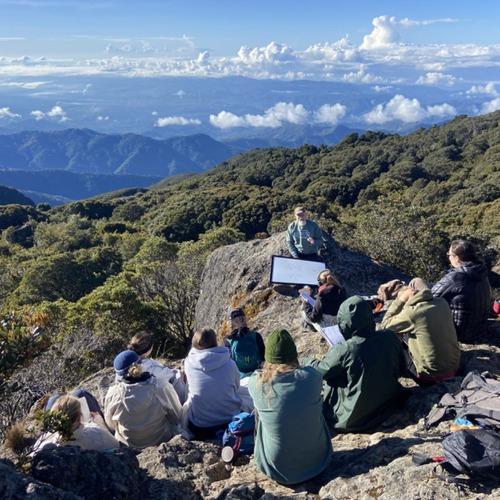
I attended classroom sessions and field trips during ornithology, aquatic sampling, microbiology and mammalogy weeks. The students were not only learning in a classroom. They were outside studying the environments they were discussing, which made the experience especially interesting to observe.
I also enjoyed learning from professors who have years of experience with the ecology of the Savegre River valley and spending time with students during meals and field activities.
A Different Kind of Classroom
One of the things I appreciated most about QERC was having the time and space to focus on research while also seeing tropical biology education in action.
Some days meant reading and writing. Other days meant heading out on a trail with a camera, joining a field trip or learning from someone who knew the local ecosystem far better than I did.
And when your work includes photographing birds in the Costa Rican mountains, that is not a bad way to spend a sabbatical.
Explore Biology at FPU
Curious about fieldwork, ecology and the natural world? Explore Fresno Pacific University’s Biology, B.A. and Biology, B.S. programs.
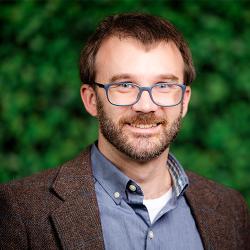
Andrew Sensenig
,
Ph.D.
Associate Professor of Biology, Program Coordinator
Andrew Sensenig, Ph.D., is an associate professor of biology and program coordinator at Fresno Pacific University. His interests in biology, evolution and the natural world often overlap with his hobbies, including birding, collecting nature-themed stamps and riding his bicycle or tricycle to campus. His family also knows that dinner can quickly turn into a biology lesson, especially when chicken is on the menu. He and his wife, Erica, have twin daughters who are very familiar with his enthusiasm for science, whether they asked for the lesson or not.