A conversation about transfer credits, transcripts and FPU’s degree completion programs
Going back to school can bring up a lot of questions, especially for adults who have college credits from years ago.
Some students are unsure if their credits still count. Others have attended more than one college, worry about old grades or do not know how many units they have completed.
FPU’s degree completion programs are designed for adults who have some college experience and are ready to return, finish their bachelor’s degree and move forward with support.
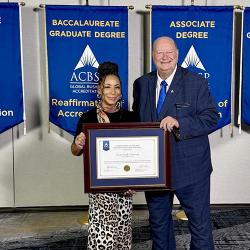
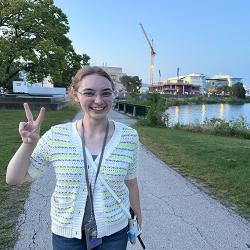
To help answer some of the most common questions, we talked with Alissa Hall, director of degree completion admissions, and Elbio Carballo, associate registrar about transfer credits, transcript review and what adult students should know before counting themselves out.
When a student says, “I have old college credits,” what is the first thing you tell them?
Elbio: The first thing I want students to know is that college credit can come from a variety of sources. Students may receive transfer credit from community college or university courses, Advanced Placement or CLEP exams or military transcripts.
The best place to start is the FPU Registrar’s Office webpage, which includes information about transfer policies, transfer limits, guidelines and links to transfer agreements. FPU also publishes transfer agreements through ASSIST, a system used by California public colleges and universities.
For students who are unsure where to begin, the most important thing to know is that they do not have to guess. The transcript review process can help students understand what they have completed and what may still be needed.
Do old college credits still count?
Elbio: In many cases, yes. It usually does not matter how long ago the classes were taken.
The most important factors are the accreditation status of the school where the credits were earned and whether the course was at the baccalaureate level. Credits from unaccredited institutions cannot transfer, and only courses designated as undergraduate baccalaureate credits may be accepted.
There may be some exceptions depending on whether a student’s major at FPU must meet external accreditation requirements, but in most cases, older credits are completely acceptable.
What does the transcript review process look like?
Elbio: Applicants need to provide transcripts from all schools they have attended.
The Registrar’s Office has transcript evaluators who review each course and determine whether it meets general education, major or elective requirements. After the evaluation is completed, students receive information that includes their GPA and total number of transferable units.
Current students can also view how each course transferred through the Transfer Summary tab in Sunbird Central, FPU’s online student portal.
What if a student attended more than one college?
Alissa: That is very common for degree completion students. Many adult students have attended more than one college in the past.
Students should submit transcripts from every college they have attended. This helps FPU complete an accurate evaluation and gives students a clearer picture of where they stand.
Do students need an associate degree to apply?
Alissa: No, an associate degree is not required.
Students who have not earned an associate degree can still begin the admissions process. The transcript review will help show how many units they have completed and what they may still need before they are ready to begin a degree completion cohort.
How many units do students usually need for degree completion?
Alissa: Applicants need a minimum of 60 units to start their cohort. Some programs may also have additional prerequisites.
Before starting the major coursework in a degree completion cohort, students need to complete 60 units of general education and elective coursework. If students are unsure how many units they have completed, the application and transcript review process can help answer that question.
If applicants do not meet the 60-unit requirement yet, they may be able to complete additional general education and elective courses before beginning the major coursework in their cohort. An admissions counselor can help students understand which courses they still need and how to build a plan to become cohort-ready.
What are the most common worries students have about transfer credits?
Alissa: Some students worry about their previous grades. FPU does have a petition process for students who fall below a 2.40 GPA.
We also often meet applicants who are unsure how many units they have completed. That is one reason going through the application process is so important. Once students are admitted, a meeting is scheduled with their academic advisor, who will review their prior units earned.
Can transfer credits help students finish faster?
Alissa: Previous credits can help students move more quickly into their degree completion program, depending on how many units they have and which requirements have already been met.
If a student is cohort eligible, they can complete their degree completion program in 18 to 24 months, depending on the length of the program. Every student’s situation is different. Some applicants may need to complete fewer general education and elective courses than others.
FPU’s degree completion programs follow a set cohort timeline, which helps students move through the program with their classmates. For cohort-eligible students, that timeline is typically 18 to 24 months, depending on the program.
What would you say to someone who thinks it has been too long to go back?
Alissa: It is never too late to pursue your dream of obtaining a bachelor’s degree.
Many adult students feel nervous about returning to school, especially if it has been years since they were last in a classroom. But asking questions is the best first step. Students do not need to know every answer before reaching out. The admissions and advising process can help them understand their options.
What is the best next step for someone with college credits but no bachelor’s degree?
Alissa and Elbio: The simplest first step is to connect with FPU and begin gathering transcripts from every college attended.
From there, the application and transcript review process can help students understand how many units may transfer, whether they meet the 60-unit requirement and what they may still need before starting a degree completion cohort.
Students with old college credits should not assume those credits no longer matter. A transcript review can help show what is possible.
A final word for adult students thinking about finishing their degree
Alissa and Elbio: Going back to school as an adult can feel overwhelming at first, but students do not have to figure it out alone.
Old credits may still count. Multiple transcripts can be reviewed. Previous grades can be discussed. Missing units can often be completed before starting a cohort.
For adults who have college credits but no bachelor’s degree, the best next step is simple: ask questions, submit your transcripts and let the process show what is still possible.
Quick Answers About Transfer Credits and Degree Completion
Q: Do old college credits still count?
A: In many cases, yes. Older credits may still transfer as long as they come from an accredited institution and meet undergraduate baccalaureate-level requirements.
Q: Do I need an associate degree to apply to a degree completion program?
A: No. An associate degree is not required. Students need to meet the required number of transferable units before starting their degree completion cohort.
Q: How many units do I need for FPU degree completion?
A: Students generally need at least 60 units before starting a degree completion cohort. Some programs may have additional prerequisites.
Q: What transcripts do I need to submit?
A: Students should submit transcripts from every college they have attended so FPU can complete an accurate transfer credit evaluation.
Q: How long does a degree completion program take?
A: Students who are cohort eligible can typically complete their degree completion program in 18 to 24 months, depending on the program.
This transcript was adapted from the original interview.
Ready to take the next step?
Whether transferring or returning to school, we’re here to help you bring your vision to life. Explore degree completion programs at FPU
Have an idea for Sunny's Blog?
Email storyteam@fresno.edu.