Now students can optimize their school experience so they can optimize their life.
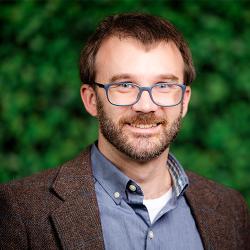
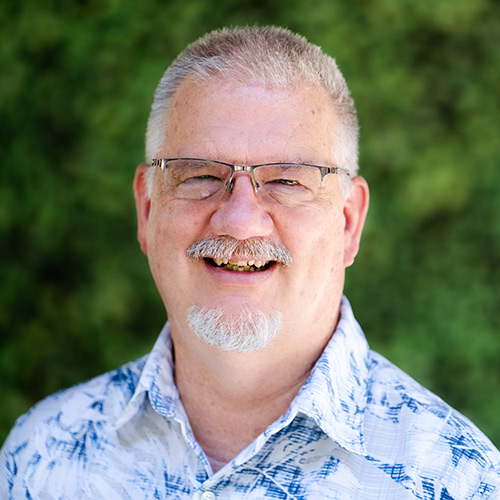
Clint Harris

Traditional undergraduates are seen as young people recently graduated from high school who largely center their lives around their studies, working part-time jobs for spending money while preparing for future careers. Under this vision they live on campus in dorms for four years and see their families on weekends and holidays.
The reality for most people pursuing degrees at FPU is quite different. These students are more likely to work nearly or completely full-time to support themselves or contribute much-needed household income, live at home and regularly assist their parents, siblings and other relatives.
Many transfer from community colleges, coming with varying amounts of credits earned. Most are the first in their family to attend a four-year college or university, making them a source of pride for parents who lack the personal experience to help them make decisions about their higher education.
Today at FPU, 63% of students are first-generation and 60% identify as Hispanic. Among traditional undergraduates, 50% qualify for Pell Grants—a program for students with financial need—52% come from families who earn $40,000 a year or less and 97% receive some form of financial aid. “We’re no longer primarily a four-year residential college,” said Laura Schmidt Roberts, Ph.D., director of general education.
To respond to the challenges these real-life students face, this fall the university took an approach rare in higher education, changing its academic calendar. Traditional calendars offer Monday–Wednesday–Friday classes with 50-minute sessions and Tuesday–Thursday classes with 75-minute sessions.
FPU’s 2025–2026 calendar keeps the Tuesday–Thursday schedule and changes other classes to Mondays and Wednesdays, with 75-minute timeblocks for all sessions. “This was in response to feedback from students and faculty, who expressed willingness to teach in the revised timeblocks because it better serves students,” Schmidt Roberts said.
Fridays, now called Flex Fridays, are open for activities that need a deeper dive: laboratory classes, field work, athletic practices and travel, performance rehearsals, etc. These extended blocks of time are particularly important in programs such as nursing, where the curriculum is tightly scheduled. “It’s not that there’s nothing on Friday, but you can do something that requires more flexibility,” Schmidt Roberts said.
These technical-sounding changes are life-changing. “Now students can optimize their school experience so they can optimize their life,” said Clint Harris, registrar.
Conversation about changing the schedule began in early August 2024. Schmidt Roberts and Harris led a process that involved all faculty, university and Fresno Pacific Biblical Seminary, who occupy space on the main campus in Southeast Fresno.
At the center was a faculty work group composed mostly of department chairs, program directors/coordinators or disciplinary leads. They were Darrell Blanks (education), Whitney Bortz (liberal studies), Don Diboll (kinesiology and health sciences), Laura Gonzalez (liberal arts), Daniel Larson (literature, fine arts and humanities), Pamela Johnston (history), Robin Perry (education), Alan Thompson (biology) and James Van Slyke (psychology, social science).
The next month brought faculty input sessions discussing two options, along with a faculty survey and other opportunities for faculty feedback. Students were also surveyed, and coaches, student development officials and food service representatives were included. “It felt really important to have broad conversations across the community,” Schmidt Roberts said. “It was a change that affected everyone.”
Fortunately, there was widespread agreement that something needed to be done. “We had a schedule made for a significantly different student body,” Harris said. “The faculty understood.”
The formal recommendation went to Faculty Senate October 1, 2024, and the response was a resounding affirmation. It was passed with 52 yes votes, one serious reservation vote and zero no votes.
At heart the effort was about teaching classes when today’s FPU students needed them rather than when faculty wanted to teach them. “More students have better schedules this fall and more students will have better schedules this spring,” Schmidt Roberts said.
Email storyteam@fresno.edu.